
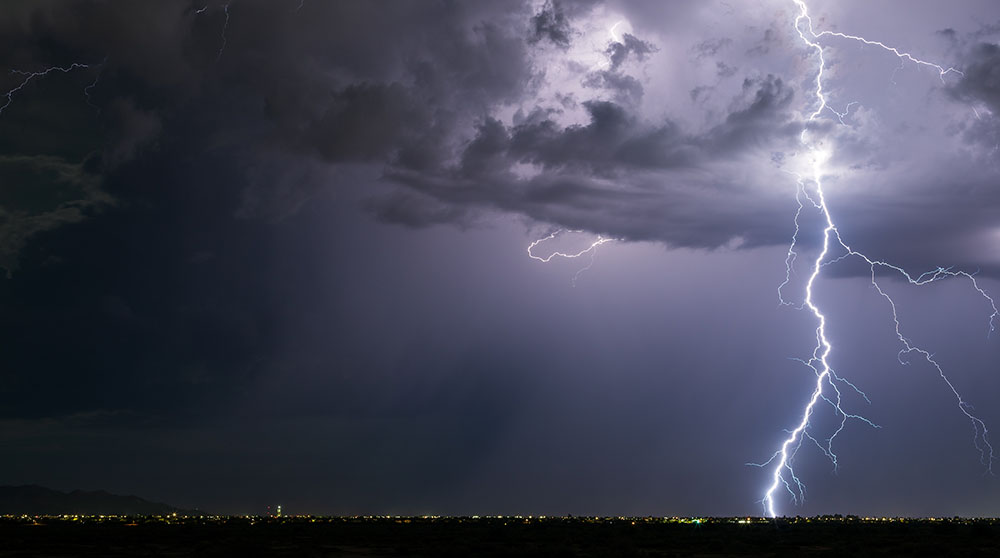
Mother Nature keeps businesses on their toes, season after season. Not long after you’ve successfully navigated summer thunderstorms, it’s time to prepare for winter ice and snow. Follow these tips to be prepared for all weather hazards that impact your business year-round.
Weather hazard: Hurricanes
Producing high winds, torrential rains, and even tornadoes, hurricanes pose a threat to any business. Even businesses that don’t operate in coastal areas can feel the effects, hundreds of miles away. Follow these steps to protect your business:
- Secure outdoor items. Secure signs, outdoor furniture, and fences, which can all become dangerous projectiles in high winds. Secure central air-conditioning units as well and trim any trees near your building to keep heavy branches from damaging your roof or windows.
- Fortify your building.
- Windows: If you haven’t already, consider investing in impact-resistant windows designed to withstand high winds. When a hurricane or other severe storm is predicted, cover windows with hurricane shutters or plywood.
- Doors: Invest in commercial doors. If you have garage, roll-up, or overhead doors, fortified wind-rated models are available.
- Roof: Have your building’s roof inspected regularly and make repairs promptly. If you have a flat roof, standing water can accumulate after heavy storms and cause water damage. Learn how to avoid this in our blog, How to prevent flat roof water problems.
- Have a disaster plan. Have a written plan for how your business will handle disasters and their aftermath. Learn more below in “Tips for all weather hazards.”
Weather hazard: High winds/tornadoes
Because high winds and heavy rain are usually features of both hurricanes and tornadoes, the tips above apply to tornadoes, too. However, here are a few tornado-specific tips to keep your business from traveling to the land of Oz.
- Watch for the warnings. Weather services may issue a tornado watch, which means conditions are favorable for the development of a tornado, but it hasn’t yet happened. However, a tornado warning means a tornado has been sighted or indicated by radar and poses an immediate threat.
- Look for the signs. Watch for:
- A darkening sky, sometimes tinged with green or orange
- Whirling debris
- Rumbling that sounds like continuous thunder or an approaching train
- Find a safe space. Make sure your business has a safe space for employees to shelter in a tornado. A basement is best, but if that isn’t available, choose a room with no windows on the lowest level. If your business is in a high-rise, go to a hallway in the center of the building.
Weather hazard: Thunderstorms and lightning
Once again, follow the hurricane preparedness tips above to keep your business fortified against the high winds and heavy rains of severe thunderstorms.
Here are some additional tips to protect your business, employees, and customers from the threat of lightning:
- Follow the 30-30 rule.
- When the time between a flash of lightning and the thunder that follows it is 30 seconds or less, take shelter immediately.
- Wait 30 minutes after the last rumble of thunder before leaving your safe shelter. Lightning can still be a threat after the storm has passed.
- Stay away from water and metal objects.
- Avoid large bodies of water, as well as any tasks involving water (e.g., washing dishes, power-washing patios or driveways). Water can conduct electricity, even through pipes.
- Metal is an excellent conductor of electricity. So being near metal objects (like a metal fence or sign) increases your risk of a burn if the object is struck by lightning.
For more information, read our blog, Stay safe during storms with the 30-30 lightning rule.
Weather hazard: Snow and ice
Winter storms can stop your business cold if you’re not prepared. Follow these tips to stay ready for whatever Old Man Winter sends your way.
- Insulate pipes. This will help prevent freezing, bursting, and water damage. Pipes in colder areas (like garages or uninsulated warehouses) are especially vulnerable.
- Keep outdoor areas clear of snow and ice. Shovel snow promptly and stock up on rock salt or ice melt for walkways and parking lots (or have a service keep these areas clear for you). Icy walkways can lead to injuries and lawsuits.
- Follow forecasts closely. If you know heavy snow is predicted, it may be safer to have your employees stay home rather than driving on treacherous roads. If your business involves outdoor work (such as construction), make sure the weather conditions are safe for crews to work.
Tips for all weather hazards
- Follow the forecasts. Keeping a close eye on the weather forecast can help you prepare earlier and prevent problems, such as employees driving or working in unsafe conditions.
- Make a disaster plan. Include the location of safe shelter areas, evacuation instructions (if the building becomes unsafe), emergency communication plans, contact information, a business continuity strategy, and other critical information. The Insurance Institute for Business & Home Safety (IBHS) has a free toolkit to help you create a business disaster recovery plan.
- Have an alternate power source. Each of these weather hazards that impact businesses can lead to power outages. A portable or built-in generator can provide light and warmth, power computers and essential equipment, and make it easier to weather the storm.
- Protect your business data. Your building and employees aren’t the only ones at risk from weather hazards. To keep your essential data safe:
- Make sure you have key contact information saved offsite
- Keep insurance and financial information easily accessible
- Keep an inventory of essential equipment with models and serial numbers (in case of damage)
- Follow the 3-2-1 rule: Have three copies of your data, with each copy saved to two types of media, and one copy at an off-site location
As a business owner, you’re responsible for the safety of your employees, your building, and your own livelihood. With the right preparation — and a good business insurance policy — you can rest assured you’ve done everything you can to safeguard them all from severe weather hazards.
This content was developed for general informational purposes only. While we strive to keep the information relevant and up to date, we make no guarantees or warranties regarding the completeness, accuracy, or reliability of the information, products, services, or graphics contained within the blog. The blog content is not intended to serve as professional or expert advice for your insurance needs. Contact your local, independent insurance agent for coverage advice and policy services.