
A home fire can be devastating for a family. That’s why these five fire safety devices are worth considering to protect your family, your home, and your cherished possessions and memories.
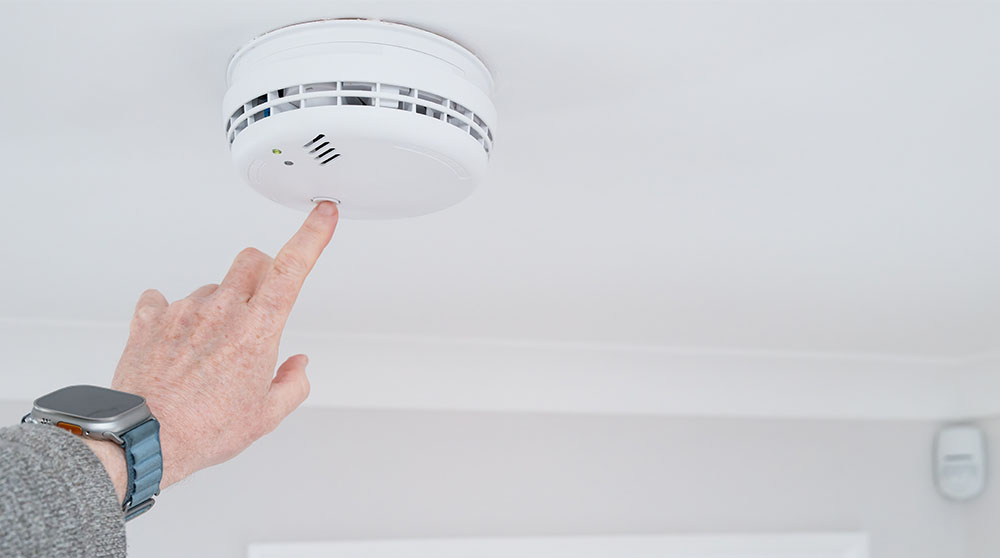
- Smoke alarms. Your home probably already has smoke alarms. But do you have enough? The National Fire Protection Association (NFPA) recommends smoke alarms inside each bedroom, outside each sleeping area, and on every level of the home, including the basement and attic. Test your smoke alarms at least once a month to make sure they are still functioning optimally (most alarms have a test button you can push to test them).
If you’re still using smoke alarms with batteries that need replacing regularly, consider purchasing more modern models with 10-year batteries. If you want to go even more modern, smart smoke alarms are available that can send a message to your phone if the alarm is tripped, so you’ll know there’s a fire even if you’re away from home.
- Fire extinguishers. You should have at least one fire extinguisher for each floor of your home (including the basement and attic). One should be placed in the kitchen, because that’s where most home fires begin. Keep another near the exit to the garage, especially if gasoline, paint, oil, or other flammable liquids are stored there. Fire extinguishers should only be used for small fires that are contained in one area.
- Fire blankets. Fire blankets are made from fire-resistant materials and are designed to help smother certain small, contained fires by cutting off the fire’s oxygen supply. Keep fire blankets in easy-to-reach locations in the kitchen, laundry room, or any other area where a small fire could occur, and always follow the manufacturer’s instructions. Avoid using a fire blanket on energized electrical equipment unless it is specifically rated for that purpose.
- Fireproof document bags/fireproof safes. These two fire safety devices can be used together to protect important paper documents, electronic storage devices like hard drives or flash drives, and even jewelry. By themselves, both bags and safes can fail in certain extreme conditions (such as an intense fire lasting many hours), so using both provides your items with extra security. And while a safe may be too cumbersome to carry in a fire emergency, you may have time to grab a document bag from the safe as you evacuate.
- Security systems. Some high-tech security systems, typically installed for protection against home break-ins, also offer integrated smoke and heat alarms. These are linked to live dispatchers who will send emergency services to your home if the alarms are triggered.
Remember: No fire safety device can protect your home if you don’t know how it works. Make sure everyone in your home knows how to use your fire extinguishers and fire blankets, and knows what the smoke alarm sounds like when it goes off. Have an evacuation plan and an established meeting spot outside your home, and stage fire drills for your family. You can get tips on creating a fire escape plan at Ready.gov.
With the right fire safety devices and know-how, you can greatly reduce your risk of a home fire. However, no plan is foolproof — so make sure you have plenty of homeowners insurance, just in case.
This content was developed for general informational purposes only. While we strive to keep the information relevant and up to date, we make no guarantees or warranties regarding the completeness, accuracy, or reliability of the information, products, services, or graphics contained within the blog. The blog content is not intended to serve as professional or expert advice for your insurance needs. Contact your local, independent insurance agent for coverage advice and policy services.