
Reducing fire risks in your home begins with knowing which household items are often linked to fires. Here are some common fire hazards found around the home, plus tips for handling these items safely.
Extension cords.
Extension cords are a factor in about 3,300 U.S. home fires each year. If you plan to use extension cords in your home, follow these precautions:
- Only use an extension cord if it’s absolutely necessary.
- Only use extension cords temporarily. Do not use them as a permanent solution for powering electrical items.
- Discard damaged cords. Replace cords that are missing ground connections, show signs of wear, have cracks or cuts, or if you can see bare wire exposed.
- Use the right cord for the job. Make sure the cord is rated for its intended use — indoors or outdoors — and can safely handle the electrical load of the equipment being connected. Lower-gauge numbers generally indicate thicker conductors capable of carrying more current, but always follow the cord’s marked electrical rating.
- Use the shortest cord you can. The shorter the cord, the less power will be lost across the distance covered.
- Never use an extension cord with a space heater. Space heaters draw high electrical current that can overheat cords and start a fire.
You can learn more about extension cord safety and choosing the right gauge cords from the Electrical Safety Foundation International website.
Dryer lint.
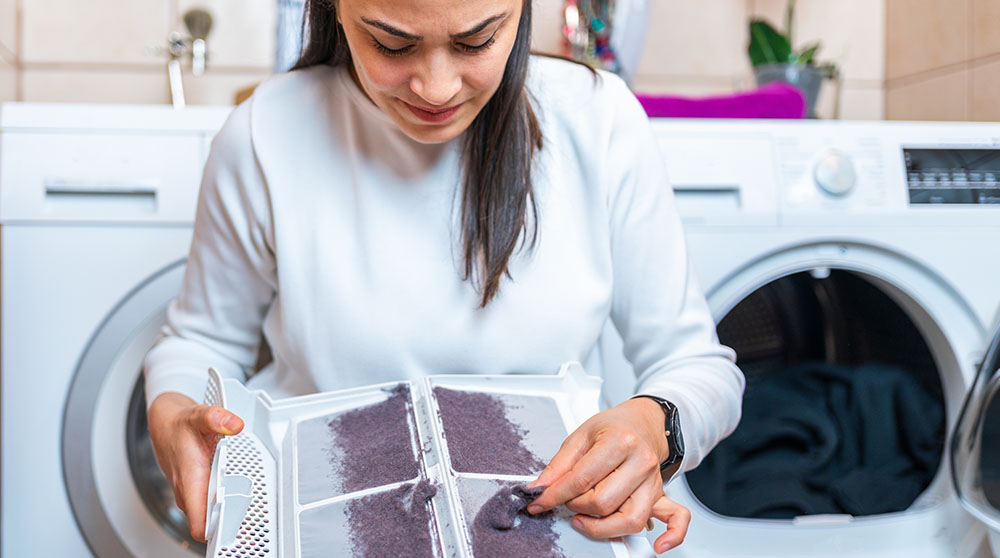
Lint can accumulate in the lint filter, dryer vent, exhaust duct, and around the dryer. Because lint is highly combustible, this buildup can increase the risk of a dryer fire. A few easy steps can reduce fire risk in your home:
- Remove lint from the filter after each load.
- Every 3-6 months, clear out your outdoor exhaust vent flap and dryer vent hose (at the back of the dryer).
- At the same time, clean out the area behind the dryer, where lint can build up.
- Use a nylon brush to clean the lint filter every six months to prevent clogging.
- Keep the area around the dryer free of any flammable materials.
- Watch for warning signs likelonger drying times, excessive heat, or a burning odor; these may indicate restricted airflow or lint buildup that should be addressed.
Paint/chemicals.
Paint, varnishes, and paint thinners, especially those that are oil-based, can be extremely flammable and spark flash fires. Household cleaners, if not used as directed, can also trigger fires. Follow these tips to stay safe:
- Store paint and chemicals away from heat sources. Keep these items well away from furnaces, water heaters, and space heaters. If you’re painting outside in warm weather, keep paint and chemicals out of direct sunlight and store them in a cool place as soon as you’re finished for the day.
- Carefully dispose of oil-soaked rags. Rags used with oil-based paints, stains, or finishes can generate heat as they dry and may ignite through spontaneous combustion if piled together. Do not leave used rags in a pile or ordinary trash container. Store them in an approved, tightly covered metal container and follow local requirements for proper disposal.
- Don’t mix household cleaners. Chemicals that are safe when used separately can produce dangerous reactions when combined. For example, mixing bleach with ammonia can release toxic gases that may cause serious respiratory injury. Always follow product labels and use cleaning products only as directed.
Outdoor and indoor cooking appliances.
Whether you’re grilling or smoking meats outdoors or cooking on a stovetop indoors, cooking appliances are an obvious source of fire risk. Follow these tips to prevent fires from cooking appliances.
Safety tips for grills and smokers:
- Never use a grill or smoker indoors.
- Place your grill or smoker at least 10 feet away from your house, deck railings, and overhanging eaves. Always place it on a flat surface so the grill or smoker is steady.
- Never leave a grill or smoker unattended during use.
- If you use charcoal starter fluid, never add it to an existing fire.
- If you have a propane grill, inspect cylinders, hoses, regulators, and connections for damage or leaks before use.
- Keep your grill or smoker clean; remove fat and grease buildup and ashes after each use.
- For smokers, use a dry, seasoned wood for a more predictable burn.
- For propane or pellet hoppers, inspect hoses and connections for leaks and wear before use.
- Allow coals and ashes to cool completely and place them in a metal container with a tight-fitting lid, away from combustible materials.
Safety tips for indoor stovetops:
- Never leave a pot or pan on the burner unattended.
- If you are cooking with oil or other fats, turn the burner off if the grease begins to smoke.
- Turn pot handles toward the back of the stove so they won’t be bumped or pulled over.
- Keep a pan lid, baking sheet, or fire blanket nearby to smother a grease fire. Never use water on a grease fire.
- Keep a kitchen fire extinguisher on hand.
For more information on home fire safety devices, read our blog, “5 fire safety devices to protect your home.”
Cigarettes.
Sadly, falling asleep with a lit cigarette in hand is a more common cause of home fires than you might imagine. If you smoke, follow these safety tips:
- Always smoke outside.
- Extinguish cigarettes completely in an ashtray or bucket of sand before discarding.
- Never smoke while drowsy, or after taking medication that may make you drowsy.
- Never smoke around medical oxygen, which can catch fire and explode.
- Never smoke in bed.
- If you smoke e-cigarettes, follow the safety tips for lithium-ion batteries below.
Lithium-ion batteries.
Lithium-ion batteries are used in phones, laptops, tablets, e-cigarettes, power tools, e-bikes, and more. If used improperly, these batteries can be a fire hazard; a lithium-ion battery fire can release toxic gases and even lead to explosions.
Follow these safety tips for devices powered by lithium-ion batteries:
- Unplug all lithium-ion devices as soon as they’re fully charged.
- Only use the cord and charger provided with the device, or one approved by the manufacturer.
- Always charge your device on a hard, flat surface.
- Stop using your device if it feels very hot, begins to swell, gives off any strange odors, leaks, smokes, or makes popping or hissing noises.
- Charge large items like e-bikes and power tools outside whenever possible.
- Protect lithium-ion devices from extreme temperatures.
EV charging stations.
Electric vehicles are powered by lithium-ion batteries. Charging an electric vehicle can present a fire risk if the charging equipment is not installed and used properly. Follow these fire prevention tips:
- Before charging an electric vehicle at home, have a qualified electrician check your electrical system to see if it can handle charging.
- Have an electrician install a new circuit specifically for your charging device.
- Install charging equipment away from busy areas. Keep flammable items away from the charging station.
- Only use devices approved by a qualified testing laboratory.
- Read and follow all manufacturers’ directions.
- Watch for wear and damage on cords; never use damaged cords when charging.
- Do not use extension cords with the charger.
- Cover the charging station outlet to keep water out.
- Make sure chargers, receptacles, and covers installed outdoors are designed and rated for outdoor use.
It can take months to recover from the devastation of a home fire, so taking a few precautions to reduce fire risks is well worth the effort. And if, despite your efforts, you still experience a fire in your home, you can count on our homeowners insurance to be here for you and your family.
This content was developed for general informational purposes only. While we strive to keep the information relevant and up to date, we make no guarantees or warranties regarding the completeness, accuracy, or reliability of the information, products, services, or graphics contained within the blog. The blog content is not intended to serve as professional or expert advice for your insurance needs. Contact your local, independent insurance agent for coverage advice and policy services.