In 2024, non-residential fires resulted in $3.6 billion in property losses in the U.S., according to statistics from the Insurance Information Institute. And data from the Federal Emergency Management Agency (FEMA) show that 40% of small businesses that close after a natural disaster (such as a fire) never reopen.
Clearly, protecting your business from fire needs to be a high priority — and that’s why we’ve created this fire safety checklist to help you reduce your risk. We’ve divided the checklist into the three most important categories of fire safety and prevention tasks: fire alert and protection systems, elimination of fire hazards, and employee training.
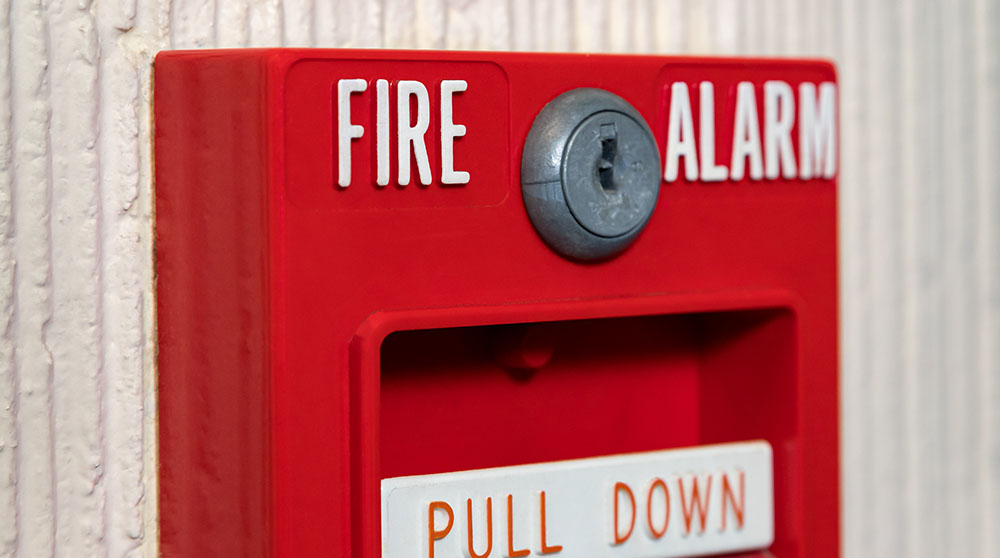
1. Fire alert and protection systems. Most commercial buildings are required by law to have commercial-grade fire detection systems. You can view NFPA 72, the most recent standards from the National Fire Protection Association, at the NFPA website.
Make sure your systems meet these regulations, OSHA requirements, and any state/local ordinances. Then follow these steps to keep equipment prepared for a fire emergency:
- Have your fire alarm system certified and test it annually.
- If you have an automatic sprinkler system, have the water control valves, air and water pressure checked periodically by a designated employee(s) or sprinkler contractor. Protect sprinkler heads with metal guards and make sure there is proper clearance below the heads so they won’t be obstructed.
- Keep portable fire extinguishers on every floor in easily accessible locations and recharge them regularly.
- Make sure that fire doors and shutters are unobstructed and in good operating condition.
2. Elimination of fire hazards. Alert and protection systems are there to safeguard you from the unforeseen, but some fires can be easily prevented by taking these precautions:
- Don’t overload electrical outlets. Some appliances or electronics use more energy than others, especially those that generate heat, such as microwaves and space heaters. Don’t plug more than one of these appliances into the same outlet.
- Be careful with power strips. A power strip gives you more places to plug things in, but the outlet still provides the same total amount of power. Choose strips with surge protection and never plug one strip into another.
- Inspect electrical cords and cables regularly and swap out any frayed cords for new ones.
- Don’t store flammable materials, like paper or chemicals, near electrical equipment or heating elements.
- Keep it tidy. Clutter and debris on the floor and in walking areas can be a fire hazard.
- Avoid using space heaters at work; they can easily spark a fire if left unattended. If they are allowed in your workplace, make sure employees turn them off when leaving their workstations. Also, never plug a space heater into a power strip; the constant high power draw can cause the strip to overheat.
- If your workplace has a kitchen, practice safe cooking. Clean up grease or crumbs when you’re done and never leave running appliances unattended.
3. Employee training. All the safety planning in the world won’t prevent fire if your employees don’t know what to do. Employees should know:
- Where fire extinguishers are located, and how to use them
- How to eliminate fire hazards in their workspace (see previous section)
- Evacuation procedures and routes, including exit locations and assembly points (these should also be prominently posted)
- Emergency communication guidelines
Hold periodic fire safety training sessions and drills to onboard new employees and keep all your employees’ knowledge current.
Of course, even if you tick off every item on this fire safety checklist, you can’t prevent every possible fire. So make sure your small business is protected by from an established carrier like Frankenmuth Insurance.
This content was developed for general informational purposes only. While we strive to keep the information relevant and up to date, we make no guarantees or warranties regarding the completeness, accuracy, or reliability of the information, products, services, or graphics contained within the blog. The blog content is not intended to serve as professional or expert advice for your insurance needs. Contact your local, independent insurance agent for coverage advice and policy services.