On average, fire departments in the U.S. respond to more than 46,000 home fires caused by electrical issues each year. Because fire numbers peak in the winter months, now is the perfect time to use these electrical tips to make your home as safe as possible.
Tip #1: Have an electrician inspect your home.
A thorough inspection can give you peace of mind about the safety of your home’s electrical system. Typically, an electrician will look at these areas:
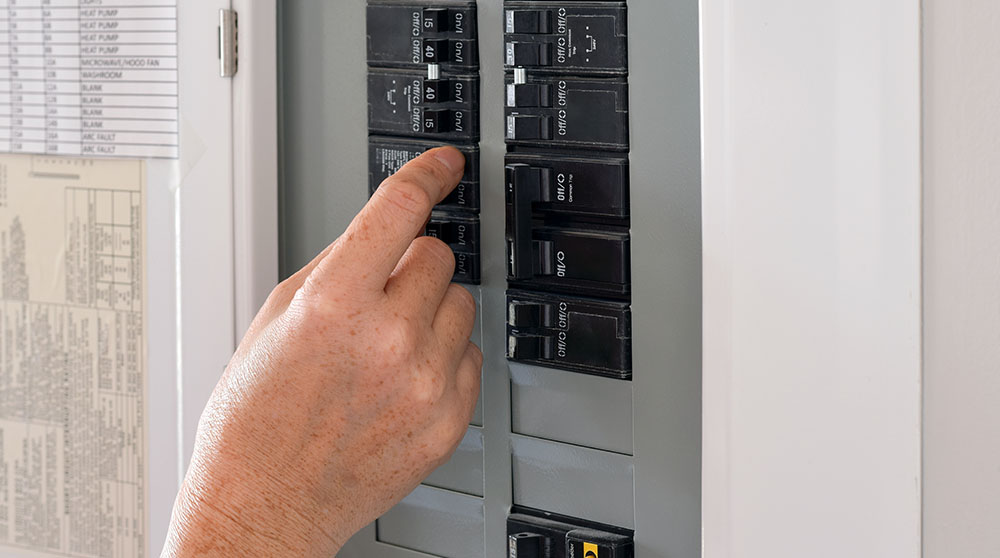
- Electrical panel. The electrician will check breaker capacity, make sure breakers are correctly labeled, and look for signs of corrosion and/or overheating.
- Outlets and switches. These will be tested for grounding, correct wiring, and operation.
- GFCI and AFCI protection. The electrician will verify that the ground-fault and the arc-fault circuit interrupters are operational. GFCIs help protect against electrical shock, particularly in areas where electricity and water may be present. AFCIs help reduce fire risk by detecting dangerous electrical arcing.
- Visible wiring. Wiring will be inspected for frayed insulation, exposed conductors, or outdated materials.
- Grounding and bonding. The electrician will confirm that your system safely directs stray electrical energy.
- Smoke and carbon monoxide alarms. The inspector will check that alarms are properly located, powered, and functioning as intended.
If any of the above areas are malfunctioning, the electrician may recommend repairs or upgrades. Older homes may have more areas that need safety upgrades.
Your inspector can also look at your overall usage, such as how many and what types of appliances you have plugged in, to see if you are at risk of overloading circuits. If you use space heaters, your electrician can help you determine whether you are using them properly (see next tip).
Tip #2: Use space heaters with caution.
Space heaters can present a fire hazard. If your overall heating system needs regular supplementation with space heaters, consider having it evaluated and/or upgraded so that the space heaters won’t be necessary.
If you choose to use space heaters, follow these precautions:
- Place the heater on a flat, hard surface well away from flammable items such as furniture, mattresses, bedding, or clothing.
- Replace older space heaters with newer models that automatically turn off when overheated or tipped over.
- Never plug a space heater into a power strip/surge protector, and don’t use extension cords. Plug the main cord directly into a wall outlet.
- Always unplug all space heaters when you leave your home.
Tip #3: Use light bulbs with the correct wattage for your home lighting.
Lamps and lighting fixtures are usually labeled with the maximum bulb wattage they support. This information is either stamped on the lamp or fixture itself or printed on a sticker, usually near the socket where you screw in the light bulb.
Never exceed the maximum recommended wattage for the fixture. If you’d like the fixture to give off more light, switch to LED bulbs, which provide more lumens (light) per watt of power. An LED bulb using just 18 watts of power can give off as much light as a 100-watt incandescent (standard) light bulb.
Tip #4: Use and charge lithium-ion batteries safely.
Lithium-ion batteries are used in phones, laptops, tablets, power tools, e-bikes, and more. These batteries have a lot of energy packed into a small space, which can make them a fire hazard if used improperly. A lithium-ion battery fire can release toxic gases and even lead to explosions.
Follow these precautions for devices powered by lithium-ion batteries:
- Unplug all lithium-ion devices as soon as they’re fully charged.
- Only use the cord and charger provided with the device, or one approved by the manufacturer.
- Always charge your device on a hard, flat surface.
- Stop using your device if it feels very hot, begins to swell, gives off any strange odors, leaks, smokes, or makes popping or hissing noises.
- Charge large items like e-bikes and power tools outside whenever possible.
You can learn more about lithium-ion battery safety at the National Fire Protection Association (NFPA) website.
As Ben Franklin discovered centuries ago, electricity is a powerful force. Follow these electrical tips to harness that power safely and protect your home and family. And speaking of protecting your home … make sure you have plenty of homeowners insurance to cover fires and other home hazards you can’t prevent.
This content was developed for general informational purposes only. While we strive to keep the information relevant and up to date, we make no guarantees or warranties regarding the completeness, accuracy, or reliability of the information, products, services, or graphics contained within the blog. The blog content is not intended to serve as professional or expert advice for your insurance needs. Contact your local, independent insurance agent for coverage advice and policy services.