
Even businesses far from the coast can suffer from the effects of hurricanes and tropical storms. To prepare your business for hurricane season, you must take steps to protect its assets from two main physical threats: wind damage and water damage. Here, we list both steps you can take right away and longer-term investments that can protect your business for years to come.
Protecting your business from hurricane water and flood damage.
Water damage is one of the most common insurance claims, accounting for one out of five commercial property claims. Take these steps to help keep your business safe and dry.
- Know your risk. Is your business in a flood-prone area? You can find out by entering your company’s address into the Federal Emergency Management Agency (FEMA) flood map. Use the key to determine if your business is located in a floodplain (a flood hazard area). If it is, take every precaution to prepare for flooding. If it isn’t, it doesn’t mean your area is floodproof, so you should still take steps to stay safe.
- Clean debris from gutters, downspouts, and drains. This will help ensure proper water flow and drainage of flood waters.
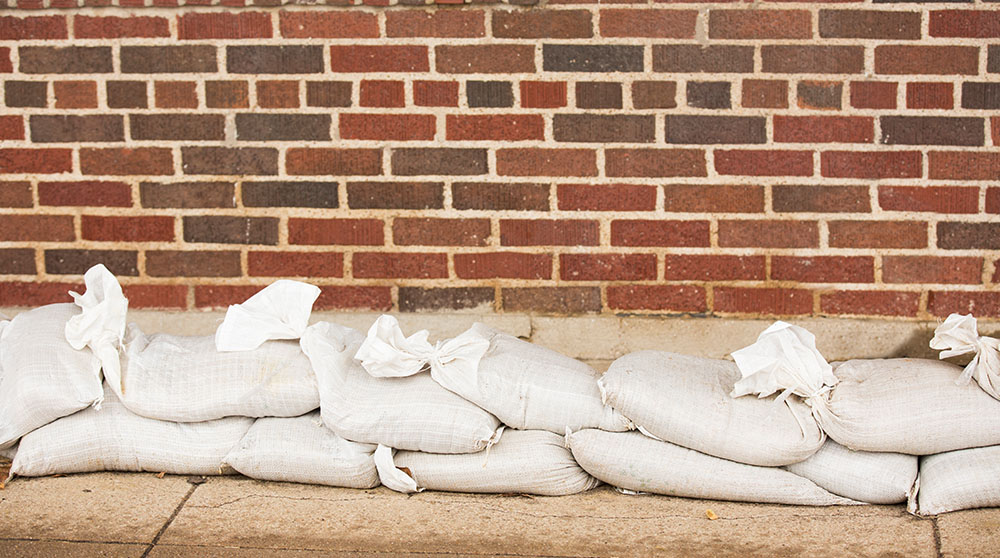
- Use flood barriers. From traditional sandbags to water-filled tubes to flood panels, a wide range of emergency barriers is available to help prevent water from entering your building.
- Elevate your utilities and important assets. If you live in a flood-prone area, the experts at FEMA recommend elevating your furnace, water heater, and electrical panel to floors less likely to be flooded (consult a professional for help with this). Also, make sure valuable assets and papers are kept high enough to avoid any flood damage.
- Install sewer backflow valves if you don’t have them. Most municipal plumbing codes require backflow prevention for commercial buildings. These valves prevent stormwater or sewage from flooding your building through toilets, sinks, or other drains.
- Dry floodproof your building’s exterior. Ideally, your building should be higher than the base flood elevation (BFE). This is the elevation at which it has a one percent chance of flooding annually (you can find it on the FEMA flood map). However, if your business is not above the BFE, you may still be able to protect it with dry floodproofing, which involves coating the building’s exterior with a membrane that prevents water from entering. Consult a professional to determine if dry floodproofing is an option for your business.
Protecting your business from hurricane wind damage.
Hurricane winds can exceed 200 miles per hour, and even a severe thunderstorm can produce winds up to 100 miles per hour — strong enough to do significant damage to your property.
- Secure outdoor items. Outdoor furniture, non-fixed signs, storage containers, and inventory can all become dangerous projectiles in high winds that can damage windows and more. Firmly secure these items or temporarily store them inside your building, if possible.
- Protect your windows. Cover windows with permanent shutters, aluminum storm panels, or plywood (the first two provide greater protection). If you have storm panels or plywood, store them flat in a dry location until you install them before a storm.
- Have your roof inspected and make repairs, if necessary. A weak roof is more likely to be damaged by high winds, and roof damage can lead to water damage from storm rains.
- Consider wind-resistant upgrades. If severe storms are a recurring problem in your area, consider investing in impact-resistant windows and doors. Impact-resistant windows are made of two panes of shatter-resistant glass held together with a strong adhesive. Wind-rated garage, roll-up, or overhead doors are also specially designed to withstand high storm winds.
Knowing how to prepare a business for a hurricane or other severe storm can save you money, time — and maybe even your livelihood. These tips will help you protect the physical assets of your business; for tips on safeguarding your business data, read the blog, Disaster preparedness: Protecting your business data, from our partner, Patriot Insurance Company.
And of course, it’s essential to have business insurance to protect all your company’s assets. Because even the meteorologists can’t predict everything Mother Nature might throw your way.
This content was developed for general informational purposes only. While we strive to keep the information relevant and up to date, we make no guarantees or warranties regarding the completeness, accuracy, or reliability of the information, products, services, or graphics contained within the blog. The blog content is not intended to serve as professional or expert advice for your insurance needs. Contact your local, independent insurance agent for coverage advice and policy services.