A good hike, a cozy campfire, sleeping under the stars … camping can be the perfect escape from our busy, complicated lives. To make sure you also escape complications like wild animals, wet campsites, and campfires gone wrong, follow these tips to keep your campsite safe and secure.
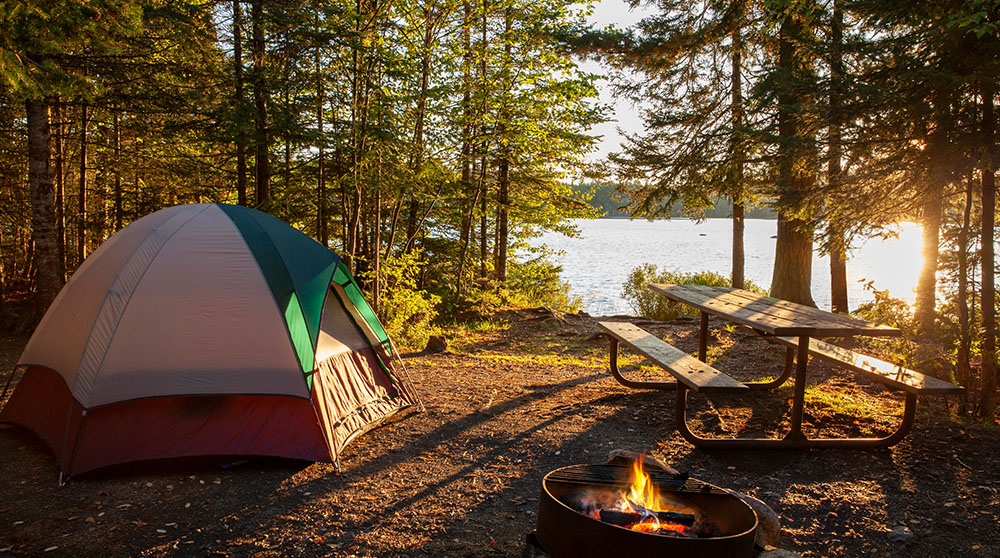
- Choose your campsite wisely. The first step to campsite safety is knowing how to choose the right spot. If you have booked a spot in an established campground, this will be easier, but if you are camping in the wilderness, you’ll have to investigate more closely. Look for:
-
- Signs of previous campers – If you see a ring of rocks from an earlier campfire, or a spot where the grass is flattened from a tent, you’ll know at least one group of campers found this a suitable site.
- Flat and firm ground – Sleeping on lumpy or sloped ground will be uncomfortable. You don’t want to be rolling downhill in the middle of the night.
- A site at least 200 feet from water – Set up camp too close to water, and floods or tidal changes could swamp your campsite. Animals need access to water, too, so you might have company if you’re at the water’s edge. And the closer you are to water, the more likely you’ll be bugged by mosquitoes and other water-loving insects.
- Healthy trees – Thriving trees provide shade and act as wind barriers. Watch out for dead trees, however; you don’t want a branch (or a whole tree) to fall on your tent. Experienced campers call these “widow makers.”
- Store food safely. Did you know that a bear’s sense of smell is more than 2,000 times as sensitive as a human’s? Anything with a scent can attract animals, including toothpaste, sunscreen, and bug repellent, so follow these rules for all foods and scented items:
-
- Never keep food or scented items in your tent, unless you want to share it with a bear or raccoon.
- Use provided storage when available. Some campgrounds and parks have bear boxes, which are animal-proof lockers for food storage.
- Bring animal-resistant canisters for food storage. If you’re camping somewhere that does not provide food storage, bring your own. You can find these containers at camping retailers. Some parks require them.
- Hang your food in a bag over a high tree branch. While lockers or canisters provide the best protection, if you don’t have these, you can suspend your food bag over a tree branch. To see how, watch this video from the Appalachian Trail Conservancy.
- Remember to store any food trash as well as food supplies. You may not be interested in peels, crumbs, or wrappers, but critters won’t be so picky.
- Store food at least 100 feet away from your tent. If animals do come looking for a snack, at least they’ll keep their distance.
If your campsite is near your car, you can store your food in a cooler in the back and lock it. Don’t store food in a soft-sided pop-up camper, though, because animals can claw their way in.
- Practice campfire safety. Follow these rules to keep everyone cool:
-
- Set up your campfire at least 15 feet away from your tent.
- Clear the area of all debris and make sure there are no overhanging branches.
- Never use flammable liquids (like lighter fluid) to build a campfire.
- Never leave your campfire unattended.
- Keep a bucket of water nearby, just in case.
- Completely extinguish the fire before going to sleep or leaving camp.
You can get more details on the right way to start, manage, and extinguish a campfire from Smokey Bear at www.smokeybear.com/campfire-safety.
With a little planning and the right campsite safety precautions, you can get in touch with nature without getting into trouble. And while you’re protecting your family in the wild, remember to protect the RV or car that’s getting you there, too, with auto insurance or RV coverage.
This content was developed for general informational purposes only. While we strive to keep the information relevant and up to date, we make no guarantees or warranties regarding the completeness, accuracy, or reliability of the information, products, services, or graphics contained within the blog. The blog content is not intended to serve as professional or expert advice for your insurance needs. Contact your local, independent insurance agent for coverage advice and policy services.