If you’re a business owner, fire risks at your business threaten everything you’ve worked for. In fact, according to the Federal Emergency Management Agency (FEMA), about 40% of small businesses never reopen after a major disaster like a fire. However, with a few safety precautions, you can eliminate many fire hazards at your business —and keep your doors open.
Follow these tips to protect your business and keep your hard work from going up in smoke.
Avoid these common fire claims.
Here are some of the most common causes of fire claims that our commercial customers experience.
Pallet fires. Idle stacks of wooden or plastic pallets are a significant fire risk, especially if stored indoors. To prevent pallet fires, follow these tips:
- Stack and space safely. Keep pallet stacks organized and within the height and spacing limits required by applicable fire codes and your building’s fire protection design. As a general guideline, outdoor pallet stacks should not exceed 15 feet in height and should be separated by at least 8 feet. Indoor pallet storage may require lower stack heights and additional clearance depending on pallet material, storage arrangement, and sprinkler protection.
- Keep pallets away from heat. Store pallets far away from hot machinery, electrical panels, smoking areas, and any open flames.
- Keep exits and equipment clear. Never allow pallets to block emergency exits, walkways, or access to safety equipment.
Power strips. Improper use of power strips can lead to overheating and fires. Limit the use of power strips as much as possible, and follow these safety guidelines:
- Don’t plug high-draw items into power strips. Typically, any appliance that creates heat, such as a microwave, coffee maker, or space heater, draws more power and should only be plugged directly into an outlet.
- Don’t connect multiple power strips. Power strips should be plugged directly into a properly installed wall outlet and used only within their rated capacity.
- Don’t use damaged power strips. If a power strip shows signs of cracking or wear, or is hot to the touch, unplug all devices from the strip and replace it.
- Never run cords under rugs or carpets. Covering electrical cords can restrict heat dissipation and conceal damage. Foot traffic and furniture can also crush or wear the cord, increasing the risk of overheating, electrical arcing, and fire. Keep cords uncovered and protected from damage.
Improperly maintained fire safety devices. Putting fire safety devices in place is just the first step to fire prevention. If these devices and systems aren’t properly maintained, they can fail to do their jobs. Take these steps to make sure yours are working the way they should to protect your business.
Fire extinguishers: Once a month, perform these checks on all company fire extinguishers.
- Make sure the extinguisher is visible and easy to reach.
- Check that the pressure gauge needle points to the green area.
- Verify that the safety pin and tamper seal are intact.
- Look for cracks, dents, leaks, or heavy rust. Replace any damaged extinguishers.
- Shake or invert dry-powder units to prevent powder packing.
In addition to monthly checks, a certified expert should do an annual check of all fire extinguishers.
Sprinkler systems: Once a month, perform an in-house check of these components.
- Control valves – Verify that they are open, locked, and free of leaks.
- Pressure gauges – Confirm that pressure is at normal levels.
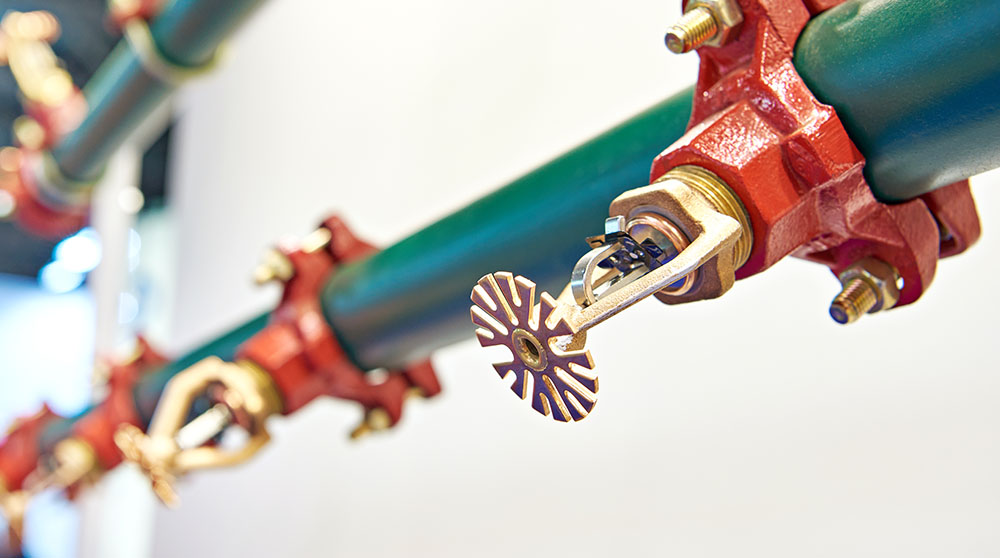
- Sprinkler heads – Make sure there is a minimum of 18 inches of clearance below sprinkler heads, and check the heads for dust, corrosion, or physical damage.
In addition to routine visual checks, have the sprinkler system professionally inspected, tested, and maintained annually by a qualified fire protection contractor in accordance with applicable standards and local requirements.
Other common fire risks for businesses.
In addition to these frequent claims seen by Frankenmuth Insurance, national statistics show that two more common causes of business fires are cooking and heating systems/appliances. Of these two, cooking fires were by far the most common, causing nearly a third of all workplace fires.
Tips to prevent workplace cooking fires.
First, establish these safety rules for employees preparing food in your workplace:
- Promptly remove grease, food debris, and other flammable buildup from appliances and surrounding surfaces.
- Check cords periodically on appliances (toaster, microwave, coffeemaker, etc.) to be sure they aren’t frayed or damaged. Never plug these appliances into a power strip.
- Unplug small appliances when not in use, especially at the end of the day.
- Never leave appliances unattended when in use.
In addition to educating your employees on safe food preparation, keep a fire extinguisher in your workplace kitchen/break room, just in case.
(Food service businesses, such as restaurants or bakeries, will have a much longer list of safety rules; this list pertains to businesses with small kitchens for employee use.)
Tips to prevent fires from heating systems.
Maintenance is key to preventing fires from heating sources.
- Have heating and cooling systems inspected and serviced by a qualified professional at appropriate intervals, following the manufacturer’s recommendations.
- Check and/or replace filters monthly.
- Don’t allow the use of space heaters or fans to supplement your HVAC system.
Keeping your building and its fire safety equipment well-maintained will reduce your company’s fire risks and give you more peace of mind. Having a good business insurance policy can help you rest a little easier, too.
This content was developed for general informational purposes only. While we strive to keep the information relevant and up to date, we make no guarantees or warranties regarding the completeness, accuracy, or reliability of the information, products, services, or graphics contained within the blog. The blog content is not intended to serve as professional or expert advice for your insurance needs. Contact your local, independent insurance agent for coverage advice and policy services.