
Festivities for America’s 250th birthday (also known as the Semiquincentennial — try saying that five times fast) are just around the corner. Before you start celebrating America’s freedom, however, use our Fourth of July safety guide to make sure your celebration is free of hazards and mishaps.
Tips for Fireworks Safety
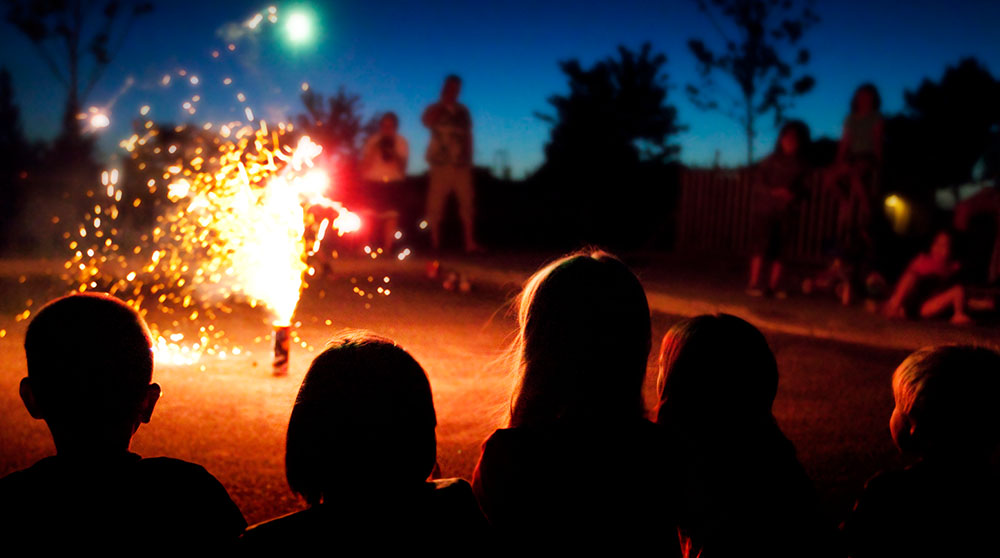
“The rockets’ red glare” is a great lyric, but in reality, sparks from bottle rockets and other fireworks can set your lawn, your home, or even you, on fire. In 2024 alone, 14,700 people were treated for fireworks injuries in emergency rooms around the country, and 11 people died.
Clearly, from a safety standpoint, your best bet is to get in the car and go see a professional fireworks display with your family. However, if your day feels incomplete without lighting something on fire, then follow these fireworks safety guidelines:
- Read labels before lighting. Follow all safety recommendations on packaging.
- Find out local fireworks laws and adhere to them.
- “M” stands for “Mistake.” Don’t use M-class explosives — they’re illegal and dangerous.
- Adults should be the only ones to handle, light, and move fireworks. Kids should stay a safe distance away.
- Keep pets indoors. Fireworks can injure or frighten them.
- Light fireworks outdoors, away from buildings, trees, and vehicles. Allow a 30-foot radius for ground-based fireworks and a 100-yard radius for aerial varieties.
- Light one firework at a time. After lighting, move away quickly.
- Avoid container fireworks in bottles or cans.
- Have a connected hose, bucket of water, and/or fire extinguisher on hand. Be prepared to extinguish flames quickly.
- Don’t give a dud another chance. If a firework fails to light, give it space, dispose of it properly, and try another.
- Dress for the occasion. Avoid loose-fitting clothing and open-toed shoes.
- Don’t DIY. Never attempt to make your own fireworks. It’s a recipe for disaster.
- Dispose of fireworks safely. At the end of the evening, soak used fireworks thoroughly before moving or disposing of them.
Keep an eye on the weather in the days leading up to your celebration. If weather conditions are extremely dry, reconsider your at-home fireworks plan and attend a professional display.
Tips for Firepit Safety
If gathering around the firepit with some marshmallows is on your Semiquincentennial to-do list, follow these guidelines to do it safely.
- Establish a safe spot. Place your fire pit at least 10 feet from your home or other structures, on a level surface made of fire-safe material.
- Keep it low and slow. Don’t add gasoline, lighter fluid, or kerosene, which can cause flames to flare out of control. Use seasoned hardwoods like oak, hickory, and maple that burn hot and slow.
- Never leave a fire pit unattended. Also, children, pets, and guests should stay at least three feet away from the flames.
- Nix the pit on windy or dry days. These conditions exponentially increase the risk of flames getting out of control.
- Extinguish flames completely with water. When you’re finished with your fire, drown it, then stir it with a shovel. Also, keep a hose, bucket of water, or fire extinguisher close by.
Tips for Boating Safety
If Independence Day finds you setting sail instead of setting off fireworks, read these tips for a quick boating safety refresher course.
- Study up before you float off. Many states require boaters to take some kind of certificate course before they can operate a motorized boat or personal watercraft (like a Jet Ski).
- Get equipped for safety. Life jackets (enough for everyone on board), throwable flotation devices, fire extinguishers, visual distress signals, navigation lights, ventilation and backfire flame arrestors, and sound devices (like a horn or bell) are all required by law.
- Be a safe captain. Whoever is piloting the boat has an even bigger responsibility for the safety of everyone on board. If you’re in charge, remember:
-
- Let someone know your float plan. Make sure someone back on land knows where you’re going, how long you plan to be gone, and how you can be contacted.
- Do a pre-departure inspection. Check safety equipment, fuel and oil levels, lines, and ventilation.
- Operate at a safe speed. Driving your boat too fast makes it harder to react to obstacles and maneuver around them.
- Watch the weather. Check the forecast before you leave, and cancel plans if storms are predicted. If an unexpected storm arises while you’re out, get off the water as quickly as possible.
- Avoid alcohol. Boating while intoxicated is a federal offense subject to fines and criminal penalties. Almost half of all boating accidents involve alcohol.
- Set a good example. Wear your life jacket and follow safety rules.
And just in case, make sure you have plenty of homeowners insurance and boat insurance coverage. With a little preparation, you can put safety first when you celebrate the fourth.
This content was developed for general informational purposes only. While we strive to keep the information relevant and up to date, we make no guarantees or warranties regarding the completeness, accuracy, or reliability of the information, products, services, or graphics contained within the blog. The blog content is not intended to serve as professional or expert advice for your insurance needs. Contact your local, independent insurance agent for coverage advice and policy services.