
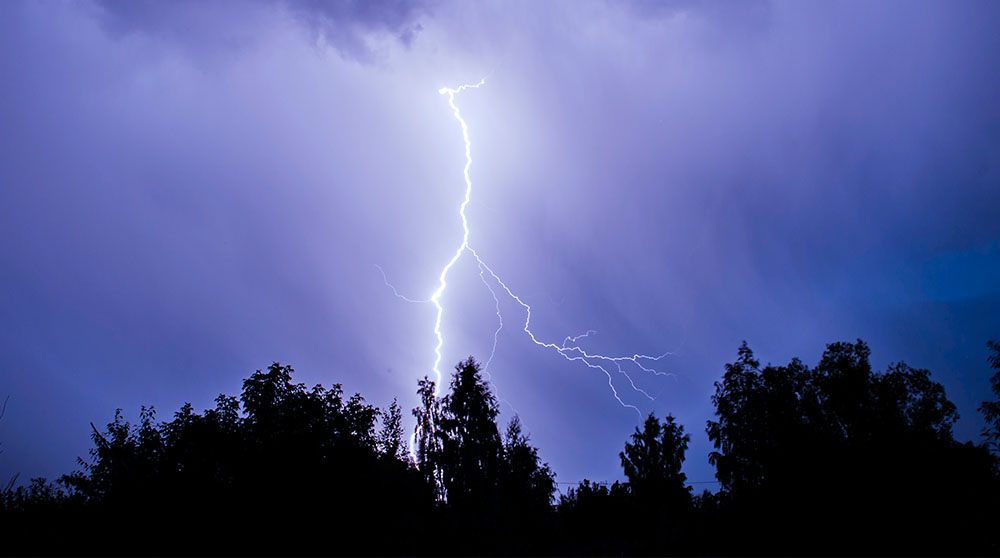
While the odds of being struck by lightning are low, there are still dozens of lightning-related deaths each year in the United States, and over 20,000 worldwide. So, it’s worth playing it safe by following the 30-30 lightning rule when storms are threatening.
What is the 30-30 lightning rule?
This lightning safety rule has two parts:
- When the time between a flash of lightning and the thunder that follows it is 30 seconds or less, take shelter immediately.
- Wait 30 minutes after the last rumble of thunder before leaving your safe shelter. Lightning can still be a threat after the storm has passed.
If you can’t see lightning, but you do hear thunder, take shelter. Remember the phrase, “When thunder roars, go indoors.”
Other ways to protect yourself from lightning.
The 30-30 lightning rule lets you know when lightning may threaten your safety. Read these guidelines to know where the greatest danger lies.
- Stay away from water. If you are planning a day at the beach or a boating excursion, check the forecast; if thunderstorms are predicted, change your plans. Stay away from water indoors during a storm, too — don’t shower, wash dishes, etc. Water is an excellent conductor of electricity, even through pipes.
- Stay away from windows, doors, and concrete. Windows and doors may break in a storm, and their metal elements could conduct electricity from lightning. Concrete typically has metal rods inside it (called rebar) for stability.
- Outdoors, avoid elevated areas and tall objects. Lightning seeks out the tallest points in an area, so if you are unable to find shelter, stay away from tall trees and structures.
- Avoid metal objects. Lightning is not attracted to metal, but metal is an excellent conductor of electricity. So being near metal objects (like a golf club, umbrella, or a metal fence) increases your risk of a burn if the object is struck by lightning.
What to do if your home is struck by lightning.
If your home is hit by lightning during a storm, your first priority is to make sure that everyone is okay. Once everyone is accounted for, follow these steps.
- Check for fire or smoke. If you find either, evacuate your home immediately.
- Call 911. Whether or not you find fire or smoke, call the fire department anyway. There could still be fire in hard-to-see areas.
- Call your insurance carrier. Once everyone is safe, call to start a claim for the damage to your home.
- Have your home inspected by an electrician. Even if your home seems fine or has only sustained minor damage, the electrical wiring may have been affected.
Lightning damage led to over $1 billion in U.S. insurance claims in 2024 alone. Make sure you have reliable homeowners insurance to protect your budget from the shock.
This content was developed for general informational purposes only. While we strive to keep the information relevant and up to date, we make no guarantees or warranties regarding the completeness, accuracy, or reliability of the information, products, services, or graphics contained within the blog. The blog content is not intended to serve as professional or expert advice for your insurance needs. Contact your local, independent insurance agent for coverage advice and policy services.