
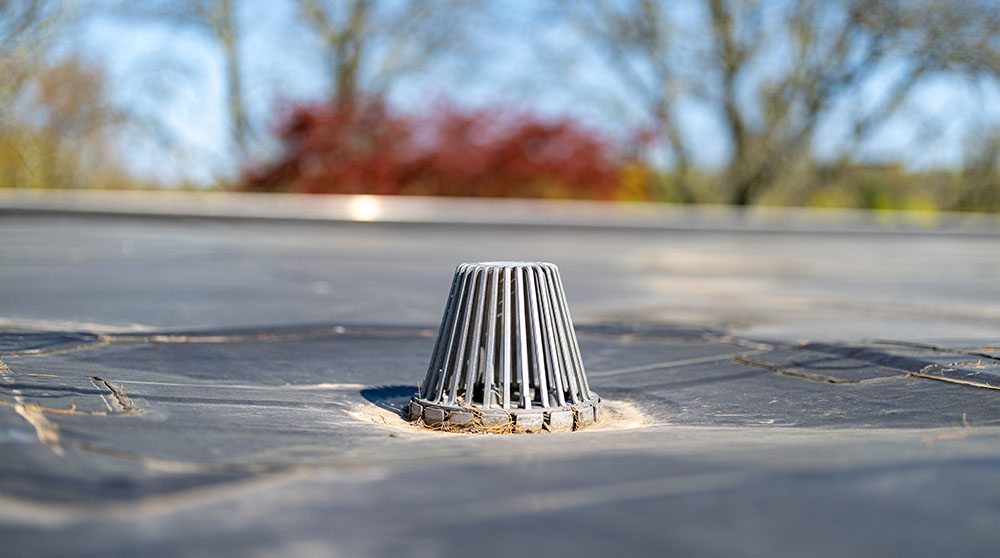
Flat roofs offer many advantages for commercial buildings: lower installation costs, easier accessibility for maintenance and repairs, extra rooftop space, and more. However, flat roofs also present unique problems, especially when it comes to the drainage of water. The slight pitch of flat roofs allows some water to drain, but standing water can become a problem if regular maintenance is overlooked.
Here’s how to prevent flat roof problems.
Make sure you have a good drainage system.
Effective water drainage will reduce the risk of water damage. Drainage options include interior drains, scuppers, and gutters; most systems incorporate a combination of these.
- Interior drains are drains placed away from the edge of the roof, with a slight slope leading to the drains to encourage drainage.
- Scuppers are openings along the edges of the roof through which water escapes and typically flows into a downspout.
- Gutters are installed on the edges of the roof, like the gutters on residential homes.
- Crickets are angled areas on the roof that encourage water to flow toward drains, scuppers, and gutters.
Which combination will work best for your flat roof? It depends on your location, climate, and budget. Consult a professional to get the right system installed at your business.
Choose quality waterproofing materials.
Drainage can help prevent pooling water, but your roof will still get wet. Here are four popular options for effective flat-roof waterproofing:
- Liquid-applied membrane. Because it is applied in liquid form, this method is particularly effective for flat roofs with irregular shapes or protrusions. The seamless application also means there are fewer potential leak points.
- Ethylene propylene diene monomer (EPDM). EPDM is a synthetic rubber single-ply membrane, a waterproof surface suitable for various climates. It is not as energy efficient as TPO (see below), but it is a cost-effective option.
- Thermoplastic olefin (TPO) membrane. This is a single-ply waterproofing material installed with heat-welded seams. Because TPO reflects heat, it’s an energy-efficient choice in hot climates.
- Modified bitumen roofing. With this method, asphalt-based sheets reinforced with fiberglass are heat-applied to create a durable, waterproof barrier. The durability of this surface makes it a good choice for flat roofs with heavy foot traffic — a rooftop bar or café, for example.
Of these four, the liquid-applied membrane and EPDM are the most budget-conscious options. However, durability and energy efficiency may make the other options worth it in the long run, depending on your business’s needs.
Be meticulous with regular maintenance.
Neglecting maintenance can lead to exterior and interior water damage and other flat roof problems. And if losses result from a failure to properly maintain the roof, your insurance probably won’t cover it.
So, once you have your drainage system and waterproofing in place, follow a regular maintenance schedule:
- Have your roof professionally inspected. Inspections should be performed at least twice a year (some experts recommend quarterly inspections). Make sure the drainage system, waterproofing, seams, and flashing are thoroughly examined, and have any necessary repairs made promptly.
- Remove debris from the roof. Clear the roof in the spring and fall, or more often if your building has many surrounding trees. Make sure drains, scuppers, and gutters are free of debris that may hamper drainage. Trim any overhanging tree branches to help minimize debris and avoid storm damage from large limbs.
- Inspect the roof after major storms. If a storm occurs, don’t wait for the next scheduled roof inspection. Check it now to see if the storm has deposited new debris or caused damage to the drains or waterproofing, and clear any pooling rainwater.
Keep records of your maintenance activities and professional inspections. Then, if your flat roof sustains damage from a storm or other event beyond your control, you can prove it’s not a result of neglected maintenance. A good business insurance policy can help you bounce back from these kinds of losses.
With the right care, a flat roof can last 30 years or more. Stay on top of roof maintenance, and your bottom line will thank you.
This content was developed for general informational purposes only. While we strive to keep the information relevant and up to date, we make no guarantees or warranties regarding the completeness, accuracy, or reliability of the information, products, services, or graphics contained within the blog. The blog content is not intended to serve as professional or expert advice for your insurance needs. Contact your local, independent insurance agent for coverage advice and policy services.