
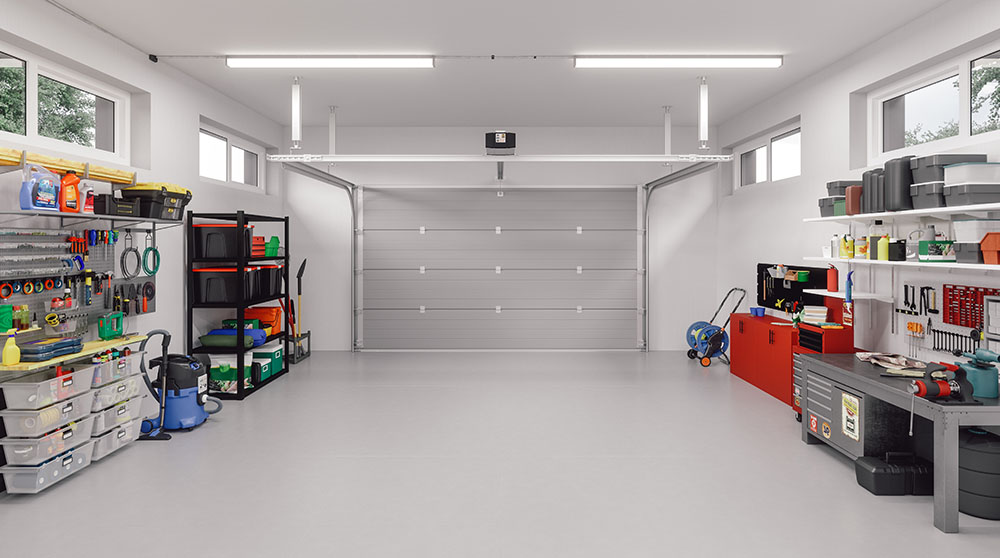
For many homeowners, the garage can become an afterthought. But safety in this space is just as important as safety in the rest of your home. Are you following these 10 garage safety tips? We’re here to help you start.
- Store machinery properly. Before putting power tools or lawn equipment away, ensure they’re turned off and have fully cooled down. Unplug all items when storing them and keep equipment out of reach of children whenever possible.
- Lock yard chemicals away. Fertilizers, pesticides, and weed killers should stay in their original containers with their labels intact. Store them in locked cabinets or on high shelves to prevent spills and to keep children or pets from accessing them. Check containers regularly for leaks or damage.
- Reduce fire risk. Gasoline and other flammable liquids should be stored only in approved containers and kept far away from ignition sources. Never leave oily rags piled together. Instead, use a metal container with a tight-fitting lid to lower fire risk.
- Secure doors and windows. Always lock the door between your garage and your home, even during the day. Windows in the garage should have working locks and coverings to keep valuables out of sight. If you have garage door openers in vehicles parked outside, keep the vehicles locked to prevent unwanted access to your garage.
- Keep walkways clear. Clutter increases the risk of tripping or falling. Maintain clear walking paths so your family can access vehicles and necessary items without tiptoeing or overextending.
- Add ample lighting. You don’t want to be reaching or searching for items in the dark. Replace burned-out bulbs and consider adding motion-sensor lighting in the garage for better visibility. Good lighting makes it easier to spot hazards, and it also discourages unwanted visitors.
- Keep animals out. Seal gaps, cracks, and openings around garage doors, walls, and vents to prevent animals from getting inside. Store pet food, bird seed, and trash in sealed containers, since the smells can attract unwanted visitors. If you notice signs of nesting or chewing, address them quickly to avoid damage.
- Organize for safety year-round. Use labeled bins and shelving to make items easier to find. If you do add vertical shelving or storage, ensure it’s anchored to the wall, so it doesn’t become a tipping hazard. Regularly revisit your garage storage systems and adjust for new equipment or seasonal storage needs.
- Elevate items to avoid water damage. Water can enter your garage during heavy rain or when snow melts. Store boxes, electronics, and other important items on raised shelving to reduce damage from unexpected leaks or flooding. In addition, avoid charging batteries on the ground. Charging power tool batteries on concrete can increase moisture exposure. Use a shelf or fire-resistant surface and never leave items charging unattended overnight.
- Install a carbon monoxide detector near the door. Even when vehicles are turned off, fumes can linger. Placing a carbon monoxide detector near the door leading into your home can alert you to dangerous levels before they spread indoors.
These garage safety tips can help reduce accidents, damage, and theft while protecting your home and what matters most. For more protection for your home sweet home, talk to a local, independent agent about comprehensive homeowners insurance.
This content was developed for general informational purposes only. While we strive to keep the information relevant and up to date, we make no guarantees or warranties regarding the completeness, accuracy, or reliability of the information, products, services, or graphics contained within the blog. The blog content is not intended to serve as professional or expert advice for your insurance needs. Contact your local, independent insurance agent for coverage advice and policy services.