
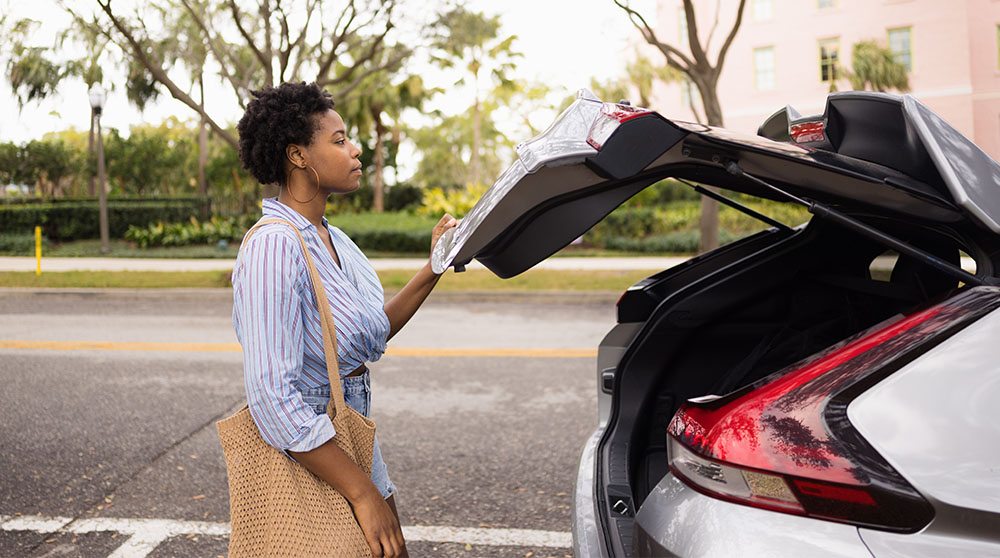
Some of the most common auto insurance claims occur when cars aren’t even on the road. Damage to cars in parking lots, driveways, and street parking is not unusual. Theft — whether of the vehicle, items inside the vehicle, or car parts — is another common claim.
Here’s the good news: Off-the-road auto insurance claims are highly preventable. Follow these tips to protect your vehicle when it’s not on the road.
How to prevent damage to your parked car
Most drivers have at least one story about dings, dents, or scratches their car has sustained (or caused) in a parking lot or space. Here’s how to reduce your risk of stationary smash-ups.
- Avoid parking too closely to other vehicles. If a space seems like it will barely fit your vehicle, keep looking. Car door dings and scratches are a typical result of too-close parking. This advice also applies to parallel street parking; if there are only a few inches between your car and the next, the odds of them hitting your car when they exit are higher.
- At night, park near a light if possible. Other drivers are less likely to hit your car if they can see it easily.
- Park away from high-traffic areas. More vehicles, more risk. If you’re parking in a structure, choose the higher levels, which have less traffic.
- Drive slowly in parking lots. Other drivers pulling out of parking spaces may have limited visibility, so drive defensively.
- Thoroughly check behind you before pulling out. Not every driver follows the “drive slowly in parking lots” rule. Check behind you physically (looking over your shoulder), using your rearview and side mirrors, and using your backup camera. Then pull out slowly.
If you have an older car without a backup camera, consider having one installed. Backup camera kits are available for between $100 and $600, depending on the camera features and whether you install it yourself or have it professionally installed.
How to avoid damage in driveways
Whether you’re pulling out or pulling in, just because your driveway isn’t the freeway doesn’t mean you’re home free. You still need to pay attention. Here’s how to avoid driveway dings and dents.
- Use your backup camera. There’s a reason backup cameras have been standard equipment in new cars since 2018: They keep you safer. When backing out of your driveway, consult your backup camera to ensure the path behind you is clear. Also, check your mirrors and do a physical check, looking over your shoulders in both directions before pulling out.
- Avoid distractions. Don’t try to find a radio station, adjust your heat or AC, and pull out of the driveway all at once. Take the time to adjust any controls before you start backing out, then give driving your full attention.
- Make room in your garage. If your family has multiple cars, the more you can park in the garage, the better. Parking several cars in your driveway makes everyone’s entrance and exit trickier, and cars in the garage will be better protected from theft, hail, and other hazards.
How to prevent theft
- Never leave the keys in your unattended vehicle. While this may seem like a no-brainer, thefts of cars with the keys or fobs left inside have increased by 20% in recent years. Even if you’re just darting into the gas station to pay for your fill-up, take your keys with you.
- Don’t leave valuable items in your car. Phones, laptops, purses, and wallets left in plain view can prove too tempting for thieves to ignore.
- Park in well-lit areas. Like vampires, thieves prefer to do their work in the dark.
- Get a remote car starter. You make life easier for car thieves in winter when you start your car to warm it up, then go back inside. A remote car starter lets you achieve the same result without unlocking your car.
- Consider installing a remote kill switch. A kill switch is connected to the ignition, fuel pump, or battery; when you activate the switch, it disables the engine so thieves can’t start the car.
Of course, sometimes accidents and thefts happen despite our best prevention efforts. So be sure you have an auto insurance policy you can count on.
This content was developed for general informational purposes only. While we strive to keep the information relevant and up to date, we make no guarantees or warranties regarding the completeness, accuracy, or reliability of the information, products, services, or graphics contained within the blog. The blog content is not intended to serve as professional or expert advice for your insurance needs. Contact your local, independent insurance agent for coverage advice and policy services.