
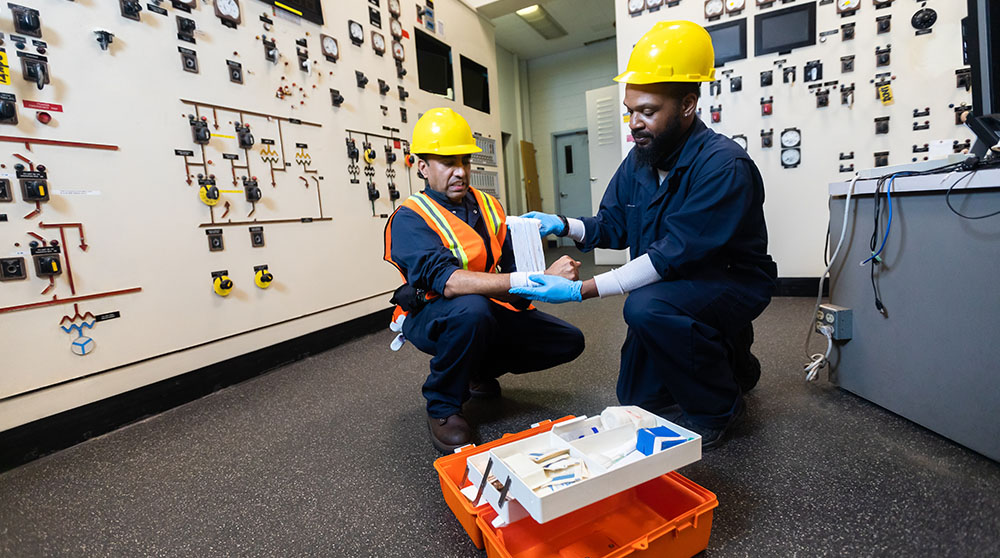
Many common workplace injuries — like those resulting from overexertion or slips and falls — can lead to absenteeism, reduced productivity, and higher workers compensation costs. Ensuring that workers receive timely medical care can help minimize these negative outcomes.
One way to get workers the care they need quickly is to use an injury triage service. Employers who have workers compensation coverage from Frankenmuth Insurance, for example, have no-cost access to a workplace injury triage hotline.
How an injury triage service works.
- When an employee experiences a non-life-threatening workplace injury, their supervisor calls the hotline for the injury triage service. (Always call 911 for potentially life-threatening injuries.)
- The call is answered by a healthcare professional, usually a registered nurse. The nurse speaks directly to the employee to get a description of the injury and its symptoms.
- The healthcare professional, using triage software designed to evaluate workplace injuries, will make a recommendation. This ranges from first-aid care administered by the employee or supervisor to a recommendation for a nearby provider who can treat the injury.
- The supervisor and employee ask any final questions they have, and then the healthcare professional creates documentation for compliance purposes.
Many common workplace injuries are resolved without seeing a provider or going to an emergency room. In fact, about 40% of the time, employees can use first aid or self-care to reduce or eliminate emergency room fees.
How triage gets employees the right care at the right time.
Here are just a few examples of common workplace injuries and how triage can help:
- Strains and sprains: Triage can help distinguish between a minor sprain and a potential fracture and instruct the employee/supervisor to perform first aid for sprains (ice, bandaging, elevation) or see a provider for fractures. The triage service can also refer the employee to the nearest appropriate provider.
- Cuts and lacerations: The triage healthcare professional can assess the size and depth of the cut and determine if stitches are necessary. If not, instructions for cleaning and bandaging the wound will be given, as well as next steps for continued care.
- Repetitive motion injuries: For repetitive motion injuries like carpal tunnel, bursitis and tendinitis, the triage service can provide immediate evaluation and first-aid instructions (such as ice and compression), make suggestions for workplace modifications (rotating tasks, adjusting workstations for better ergonomics), and refer the employee to a physical therapist if symptoms persist.
By being proactive with employees’ health and safety, businesses not only protect their own bottom line, but also show their appreciation and concern for their greatest asset: their staff.
Learn more about Frankenmuth Insurance’s injury triage services.
This content was developed for general informational purposes only. While we strive to keep the information relevant and up to date, we make no guarantees or warranties regarding the completeness, accuracy, or reliability of the information, products, services, or graphics contained within the blog. The blog content is not intended to serve as professional or expert advice for your insurance needs. Contact your local, independent insurance agent for coverage advice and policy services.